Suwannee River Water Management District | RiverFronts e-Newsletter
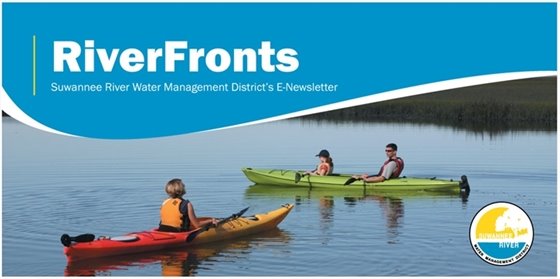
RiverFronts text with an image of three people kayaking
 

Suwannee River Water Management District
2020-2024 Goals

The Suwannee River Water Management District (District) is looking forward to 2020 and the next steps and has established new goals to protect north Florida's water resources.

"The District is continuously moving forward to overcome and stay ahead of our water resource challenges," said Hugh Thomas, executive director of the District. "These goals represent our focus over the next five years in our most critical areas."

Highlights from the strategic plan are below. The complete 2020-2024 Strategic Plan is on the District's website.

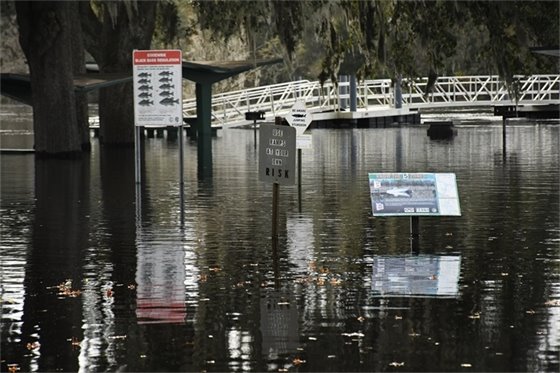
Boat ramp, picknic tables and signs under water due to flooding.

Flood Protection

Reduce and Mitigate Flooding Risks

  • Promote naturally occurring recharge through hydrologic restoration.
  • Study the 100-year flood elevations of unstudied parcels.
  • Identify unmet flood protection needs of local governments.
  • Conduct frequent river inspections.
  • Communicate best available data on flood risk to stakeholder.

Encourage Non-Structural Flood Plain Management Approaches

  • Maximize land acquisition and/or development restrictions within the 100-year floodplain.
  • Coordinate with stakeholders for consistency for flood forecasts.
  • Increase public awareness of flood protection tools, permit requirements, and flood risk.
  • Partner with stakeholders to implement flood projects.
  • Develop a consistent message to evaluate flood risk of single-family homes.
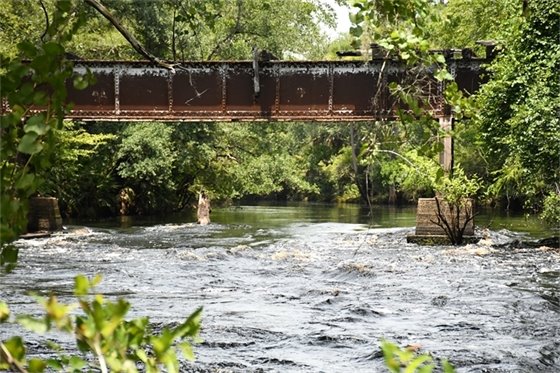
Rapids flowing under an old bridge with bright trees along the riverbank.

Natural Systems

Establish Minimum Flows and Minimum Water Levels (MFL) for Priority Water Bodies
  • Implement the approved MFL priority list.
  • Conduct scheduled MFL assessments.
  • Maintain the District monitoring network to establish and assess MFLs.
  • Develop new water resource value criteria to update and refine MFL methods.

Steward District Lands to Balance the Needs of Natural Resources and People

  • Manage District lands to achieve the highest natural resource value possible.
  • Implement and support the District Land Management Plan.

Preserve and Protect Water Resources

  • Document permit mitigation and conservation easements in a GIS format.

Optimize Public Use of District Lands

  • Optimize maintenance and restoration of District land and resources.
  • Focus communication and outreach efforts on land management.
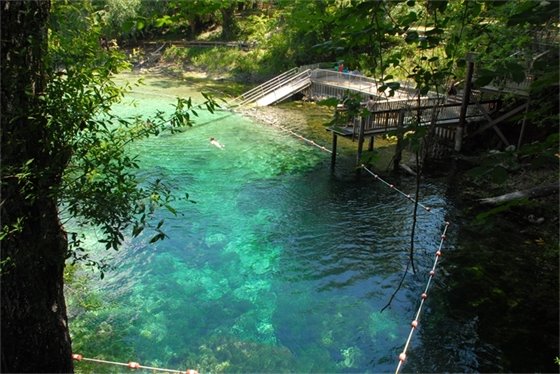
Clear, blue spring on the Suwannee River with a person swimming in it.

Water Quality

Reduce Nitrate Levels to Achieve Water Quality Criteria

  • Expand nutrient sourcing research.
  • Increase sampling of non-standard parameters.
  • Conduct project monitoring for benefits.
  • Permit to statewide water quality criteria for erosion and sediment control.
  • Increase nutrient load reductions in storm-water systems.
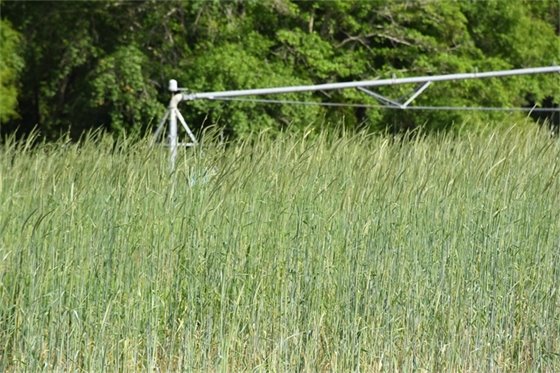
An irrigation systems in a cover crop field.

Water Supply

Sustainably Manage District Water Resources
  • Reduce groundwater withdrawal impacts.
  • Implement water resource development and alternative water supply projects.
  • Identify comprehensive feasibility and design studies.
  • Innovations for sustainable agriculture.
  • Maximize alternative water supply and reuse benefits.
  • Achieve 10% or less losses for all public supply systems.
  • Implement a net resource benefit program.
  • Develop long-range water supply planning with utilities prior to water use permit renewals.
  • Enhance existing data-driven processes to assess cumulative withdrawals for the potential of harm.
District staff presenting to a room full of stakeholders.

Mission Support

Reduce Risks Through the Management of Information and Data

  • Implement a District-wide comprehensive data management system.
  • Collect and manage high quality data to allow for data-driven, science-based decision making.
  • Reduce paper and place-bound information access by maximizing cloud-based file storage and automated authorization.
  • Optimize accessibility in facilities and information.

Maintain Institutional Knowledge

  • Establish programmatic documentation.
  • Retain employees through succession planning, mentoring, and professional development initiatives.

Strengthen Stakeholder Relationships and Partnerships

  • Build trust in District messages, staff, and science.
  • Increase public awareness of District functions in planning, projects, and permitting.
  • Sustain water resources through education of challenges and maximization of project opportunities.
  • Engage and educate stakeholders who are critical to water resource sustainability.
Share on Facebook
Share on Twitter
Share via Email

Copyright © 2006-2019 Suwannee River Water Management District. All rights reserved.
9225 County Road 49, Live Oak, FL 32060

Powered by
CivicSend - A product of CivicPlus